 23SepAir Pistol TrainingOpen to all CLDPC members. Come join us for our regular Wednesday night training session.
5:45 pm - 7:00 pm
23SepAir Pistol TrainingOpen to all CLDPC members. Come join us for our regular Wednesday night training session.
5:45 pm - 7:00 pm- 26SepHPC Range UseHPC range use
Ranges 1/3/4 in use from 12.30 for HPC members
CLDPC members use range 2 12:30 pm - 30SepAir Pistol TrainingOpen to all CLDPC members. Come join us for our regular Wednesday night training session.
5:45 pm - 7:00 pm
 4Oct22 Scoped rifle match1st Sunday of the month
range 1 10.30
25 and 50 metre targets- 7OctAir Pistol TrainingOpen to all CLDPC members. Come join us for our regular Wednesday night training session.
5:45 pm - 7:00 pm
- 10OctHPC Range useHPC range use
Ranges 1/3/4 in use from 12.30 for HPC members
CLDPC members use range 2 12:30 pm - 11Oct9MM 45 round matchQuick 45 round match , Not only 9MM. open to all calibres .
big targets at varying times
Everyone welcome
Range 1 at 10.30 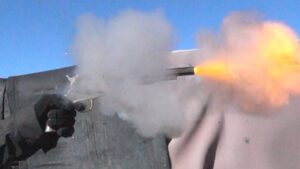 11OctBlack Powder Cartridge Match 10.30Black Powder Cartridge match
Everyone welcome ,join in the smoke and noise
10:30 am
11OctBlack Powder Cartridge Match 10.30Black Powder Cartridge match
Everyone welcome ,join in the smoke and noise
10:30 am- 14OctAir Pistol TrainingOpen to all CLDPC members. Come join us for our regular Wednesday night training session.
5:45 pm - 7:00 pm
 17OctWorking Bee and BBQWorking bee from 8am
BBQ lunch supplied from 12 pm 8:00 am- 21OctAir Pistol TrainingOpen to all CLDPC members. Come join us for our regular Wednesday night training session.
5:45 pm - 7:00 pm
Home / The facts
Target shooting in NSW: the facts
Public discussion about firearms often brings together very different circumstances. Understanding target shooting means looking at the rules that apply to the people taking part, the firearms they use and the places where they shoot.
Safety
Pistol shooting safety: separating myth from reality
For many people, the idea of someone in the family taking up pistol shooting is confronting. Firearms come to most of us through news coverage, films and television, so it is natural to assume the sport must carry real risk.
Organised target shooting is a very different thing. Measured against every other sport, it is one of the safest things you can do on a Saturday morning.
Target pistol shooting is one of the most tightly regulated sports in Australia. Every part of it is built around safety — licensing, storage, range design, supervision and training.
Before anyone shoots unsupervised they are taken through:
- safe firearm handling
- range commands and procedures
- muzzle awareness and safe directions
- loading and unloading
- club and competition rules
- emergency procedures
In most sports a safety briefing happens occasionally. Here it is reinforced every time you attend.
Competitive pistol shooting bears almost no resemblance to the way firearms are shown on screen. A range is a controlled environment, and the rules are absolute:
- firearms stay unloaded until shooting is authorised
- shooting happens only under specific range conditions
- everyone follows the range officer’s directions
- firearms point only at approved targets
- any safety concern stops shooting immediately
You see it the first time you shoot here. In ISSF pistol shooting every pistol carries an empty chamber indicator — a bright flag inserted into the chamber, so that anyone, from across the range, can see at a glance that there is no cartridge in the gun. The match official checks it every single time shooting pauses, all the way through a match. Not once at the start. Every time.
That is not anyone doubting your word. It is that “I’m sure it’s fine” is exactly how things go wrong, so nobody’s say-so is the last step — including the official’s. Everything gets checked, every time, by somebody other than the person who just did it.
The culture of the sport runs on discipline, responsibility and doing things the same way every time.
It helps to look at activities nobody thinks twice about. In 2024–25 the Australian Institute of Health and Welfare recorded about 61,000 sports injury hospitalisations across the country.
~7,200
Cycling — the single largest cause, about 12% of all sports injury hospitalisations.
~5,400
Soccer, and much the same again for Australian rules football.
18%
The share taken by the football codes together — around 10,900 hospitalisations a year.
Not listed
Target shooting does not appear in the analysis at all.
Rugby has one of the highest injury rates of any sport relative to the number of people playing it.
None of that makes cycling, soccer or football unsafe. It simply shows that injuries are an ordinary part of mainstream recreational sport.
Organised shooting does not feature in that reporting at all. Nobody keeps detailed injury figures for target shooting because there is so little to record.
The strongest safety feature of this sport is not a rule. It is the culture.
Everybody learns quickly that safety is not optional, and that the rules apply identically to the club champion and to somebody on their first morning. New members are mentored by experienced shooters, and safe habits are reinforced constantly until they stop being something you think about.
People outside the sport focus on the pistol. People inside it are there for something else entirely. Target shooting builds concentration, mental discipline, patience, consistency, hand-eye coordination and personal responsibility.
You do not win on strength or speed. You win on precision, control, and the ability to repeat a disciplined process while everyone watches.
Firearms deserve respect. Respect is not the same as fear.
Target pistol shooting is a structured, heavily regulated sport with comprehensive safety systems, continual supervision and a culture that puts safety ahead of the result. Popular sports record thousands of injury hospitalisations a year. This one barely registers.
For families weighing it up, the surprise is usually this: the sport is not about risk at all. It is about precision, responsibility and self-control, applied the same way every time somebody steps onto the range.
Licensing
Who can become a licensed target pistol shooter?
Joining a club and obtaining a firearms licence are separate steps. The club can explain the sporting pathway and provide the required training and membership information. The licensing decision belongs to NSW Police Firearms Registry.
Which means something worth saying plainly: every pistol shooter in NSW has been checked by police. Not the club. Police.
You need a genuine reason
Nobody in NSW holds a firearms licence just because they want one. You have to show a lawful purpose the law recognises — a genuine reason. Self-defence is not one of them.
Ours is sport. It applies to people who compete as current members of an approved target shooting club, and the club has to be approved for the type of firearm involved. A club approved only for rifles cannot put you on the path to a pistol licence.
And you have to keep it
The genuine reason is your club membership, so it has to stay live. Stop being a member and the reason for the licence goes with it.
What the Registry asks of you
- be at least 18;
- be a NSW resident;
- be a fit and proper person to have access to firearms;
- complete a firearms training and safety course; and
- show evidence of your genuine reason.
“Fit and proper person” is the police assessment, and it is the heart of the system. It is why the sport looks after itself.
Where we fit in. CLDPC gets you trained, gets you shooting and confirms your membership and participation to the Registry. The licence itself is between you and police — and we will help you through every step of it.
Probation
What happens before a new shooter can acquire a pistol?
New pistol shooters in NSW spend their first year on a probationary licence, and earn their way to owning a pistol. Here is exactly how that year works.
Join a club and train
You join an approved pistol club, and you complete a firearms safety course. Training comes before the licence, not after it.
Twelve months on a probationary licence
Most firearms licences run two years. New pistol shooters get twelve months, on probation, and spend it learning the sport properly.
No pistol of your own for the first six months
For the first half of that year you shoot club pistols. You cannot buy one, and you do not need to — the club supplies everything while you find out what suits you.
Your own pistol in the second six months
Finish the Pistol Safety Training Course and you can apply for a permit to buy your own. The number you can buy in that period is capped.
Your full licence
Serve the full twelve months, then apply to the Registry for your full Category H licence before the probationary one runs out.
A common mix-up. The twelve months is how long the probationary licence lasts — not a twelve-month wait before you can own a pistol. You are buying at six months, not twelve.
Buying a pistol
Does a licence allow someone to buy any firearm?
Holding a firearms licence and being allowed to buy a particular firearm are two different things. The licence says what you may shoot. Buying anything takes a separate approval, every time.
A licence is not a shopping licence. Every single firearm needs its own Permit to Acquire — approved one at a time, for that one firearm.
What each permit takes
- a current licence that covers that type of firearm;
- proof of identity;
- a police COPS Event Number confirming your safe storage — checked before you buy, not after;
- confirmation from your club; and
- your Pistol Safety Training certificate, if you are still on probation.
Your licence sets the boundary
NSW groups firearms into categories, and your licence covers one of them. A Category H target licence covers target pistols — and your club has to be approved for them too.
Equipment
What sort of pistol does the sport actually use?
Most people picture something big. The rules point the other way: nearly everything on our programme is shot with a .22, and the pistols that win matches are purpose-built target guns.
The match rules do the choosing
Calibre is not really a decision you get to make — it is written into the event. Air Pistol is .177. Standard Pistol, Rapid Fire, 25m Pistol and 50m Pistol are all .22 rimfire. Centrefire is the one match that steps up, and only as far as .32 to .38.
This is the single most common thing new shooters get wrong. A 9mm service pistol is an excellent firearm built for an entirely different job; it is not what any of these matches are scored on.
Everything is fired one-handed
Arm out, unsupported, for sixty shots. The whole skill is holding the pistol still and releasing the trigger without disturbing the sights — so what matters is control, not power.
A .22 has almost no recoil. You can shoot a full match without fatigue, and you can see where each shot went instead of spending the next second recovering from it. That feedback is how you improve.
A target pistol is a different machine
- an orthopaedic grip, shaped to your own hand, with a palm shelf that carries the weight so your fingers stay relaxed;
- adjustable rake, sights and balance weights, so the pistol settles where your arm naturally points;
- a light, crisp trigger — measured in grams, not pounds; and
- a balance built for one job: putting sixty shots through the same hole.
Six months to try everything
This is where the probation period earns its keep. For your first six months you are shooting club pistols anyway — you cannot buy one yet, and you do not need to. So try as many as you can.
Members will offer, and you should accept every time. A grip that suits one person is wrong for the next, and the only way to find out is to hold it, shoot it and compare. By the time you are eligible to buy, you will know exactly what you want — and you will have saved yourself an expensive guess.
After licensing
What responsibilities continue after licensing?
Lawful sporting ownership involves continuing responsibilities. Getting a licence is the beginning of those obligations, not the end of them.
Membership has to be maintained
Your licence rests on your club membership. Let the membership lapse and the licence has nothing holding it up. Shooters stay in clubs, and clubs know their shooters.
Participation is measured, not assumed
You cannot hold a pistol licence and never shoot. There is a minimum, it is counted, and your club reports it. Two rules set it, across the three kinds of pistol — air, rimfire and centre-fire.
- At least 4 shooting activities for each kind of pistol you own; and
- at least 6 competitive matches in total, whatever you own.
Those two rules give the yearly minimum:
- One kind of pistol — 6 competitive matches.
- Two kinds — 8, of which at least 6 are competitive matches.
- Three kinds — 12, of which at least 6 are competitive matches.
The more you own, the more you shoot. That is the deal.
A competitive match means scores kept and results recorded — casual practice does not count towards it. Clubs keep the records and report to the Registry. People who stop shooting do not keep their licences.
Renewal and changes in circumstances
Licences run for a fixed term and have to be renewed. The fit and proper person test is not a one-off at the start either — police can act on it at any point while you hold a licence. That is precisely why the sport has the record it has.
Storage and transport
How must firearms be stored and transported?
Owning a pistol comes with strict rules about where it lives and how it travels — and pistols carry the higher standard.
Every owner has a standing legal duty to keep their firearms secure — not lost, not stolen, and out of anyone else’s hands. It applies every day you hold the licence.
Pistols sit at safe storage level 2 — a higher standard than rifles and shotguns. Ammunition is locked away separately from the firearms.
And it is verified, not taken on trust: police confirm your storage before you are allowed to buy anything.
Getting a pistol to the range and home again is governed too. The Registry publishes what applies.
Your first visit
What happens on your first visit?
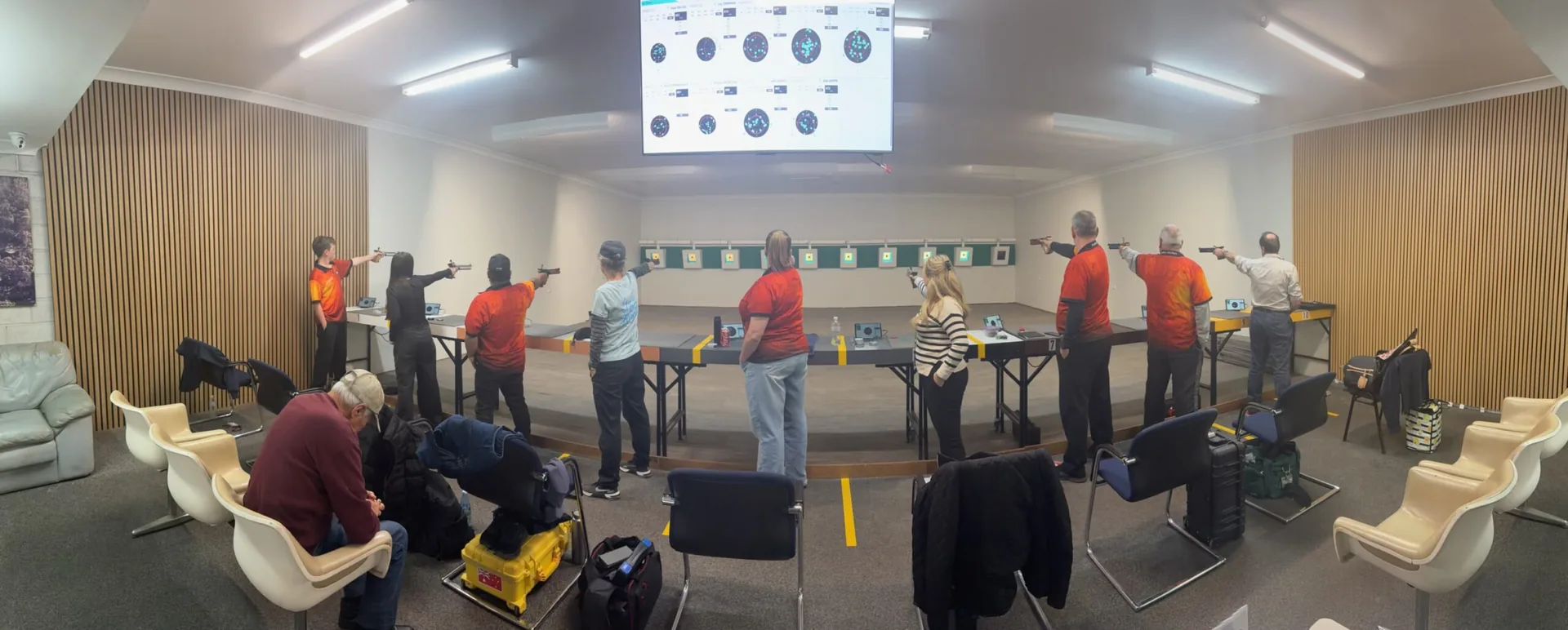
Every session runs under range rules and the direction of a range officer. If it is your first time, you are taught and supervised the whole way through — you are never handed a pistol and left to it.
Here is how a first visit to CLDPC actually goes.
Sign in
A short declaration and some ID. We tell you exactly what to bring before you come, so nobody turns up and misses out.
Learn the pistol
An instructor walks you through how it works, how to handle it and what the range commands mean — all before a shot is fired.
Shoot
You start on air pistol, with your instructor beside you the whole way.
One person runs the range
The range officer calls every start and every stop, and everyone follows — club champions and first-timers alike. It is why the range is a calm place to be.
Anyone can stop everything
See something you do not like? Call a cease fire. Everyone stops, firearms go down, and nothing restarts until it is sorted. That authority belongs to every person on the range, including you on your first day.
None of it is fussy or solemn. It is simply how a well-run range works, and after one session it feels completely natural.
Juniors
Can juniors participate?
Juniors can start at 12 in NSW, with a parent’s consent and supervision throughout. It is a real pathway into the sport, and plenty of our members came in that way.
Juniors shoot on a Minor’s Firearm Permit, available from 12 up to 18. It is not a licence and it is not about owning anything — it exists so young people can learn the sport properly, supervised.
It needs a parent or guardian’s consent, and the supervision is real: the law requires a junior to stay in their supervisor’s direct line of sight at all times. Every moment on the range, somebody experienced is watching.
Target shooting is one of the few sports where a twelve-year-old and a grandparent can compete on genuinely level terms. Strength and speed count for nothing here.
At CLDPC, a parent or guardian accompanies junior participants and stays throughout their introductory session. The club explains identification and consent requirements beforehand.
The wider sport
What sorts of shooting sports are there?
Pistol shooting includes several distinct sports. They share organised competition and discipline-specific rules, but they do not all use the same equipment, targets, positions or courses of fire.
ISSF pistol
The international precision programme, governed by the International Shooting Sport Federation. Its pistol events on the Olympic programme are 10m Air Pistol, 25m Rapid Fire Pistol and 25m Pistol. Others, including 50m Pistol, Standard Pistol and Centre Fire Pistol, are ISSF events shot at world and national level without currently being Olympic events.
Service Pistol
Courses of fire drawn from service-style shooting, combining accuracy with time limits, changes of distance and different shooting positions.
WA1500
A 1500-point aggregate match shot over a set sequence of distances, time limits and positions, with barricade and prone stages.
IPSC practical shooting
Competitors move through varied courses, scored on a combination of accuracy and time. IPSC Australia is the body recognised for the management of practical shooting in Australia.
Action Pistol
A separate discipline with its own defined courses of fire, testing accurate shooting against the clock. It is a distinct sport, not another name for IPSC, and is one of the disciplines administered by Pistol Australia.
Metallic silhouette
Competitors shoot at steel animal silhouettes set at a range of distances, scoring by knocking them down.
Black Powder
Events shot with historic firearm types or reproductions of them, using black powder propellant and the loading methods that go with it.
Single Action
Also known as cowboy action shooting, based on nineteenth-century firearm designs, with its own competition rules, categories and traditions.
This is an overview of the wider sport, not a list of every discipline offered at CLDPC. Our Disciplines page explains the club’s programme.
Where to check
Check the sources
The links below lead to the official requirements and source material used on this page. Requirements can change. For a decision about your own eligibility, licence, permit or obligations, consult the current NSW Police Firearms Registry information.
- NSW Police Firearms Registry — the authority for licences, permits and obligations in NSW
- Service NSW — Apply for a firearms licence (individual) — eligibility, genuine reason, licence terms
- Service NSW — Apply for a permit to acquire a firearm — what buying a particular firearm takes
- Sport/Target Shooting genuine reason — club membership and club approval requirements
- Participation requirements for club members — the minimum activity a licence holder must meet
- Safe storage — storage standards by firearm category
- Minors — firearms permits — junior participation from age 12
- Firearms Act 1996 (NSW) — the governing legislation
- Firearms Regulation 2017 (NSW) — participation, supervision and storage detail
- AIHW — Sports injury in Australia — hospitalised sports injury, 2024–25
- International Shooting Sport Federation — international rules and the ISSF programme
- Pistol Australia — national governing body
- IPSC Australia — practical shooting in Australia
Last reviewed: 19 September 2026
Come and see the sport for yourself
If you would like to understand what happens at a shooting club, contact us to arrange a visit. You can meet the people involved, ask questions and discuss a supervised introduction.

Visit
Campbelltown Liverpool District Pistol Club Inc.
221 Georges River Road, Kentlyn NSW 2560
© 2026 Campbelltown Liverpool District Pistol Club Inc. All rights reserved.
Shooting is a regulated activity in NSW. All participation is subject to the Firearms Act 1996 and NSW Police Firearms Registry requirements.